
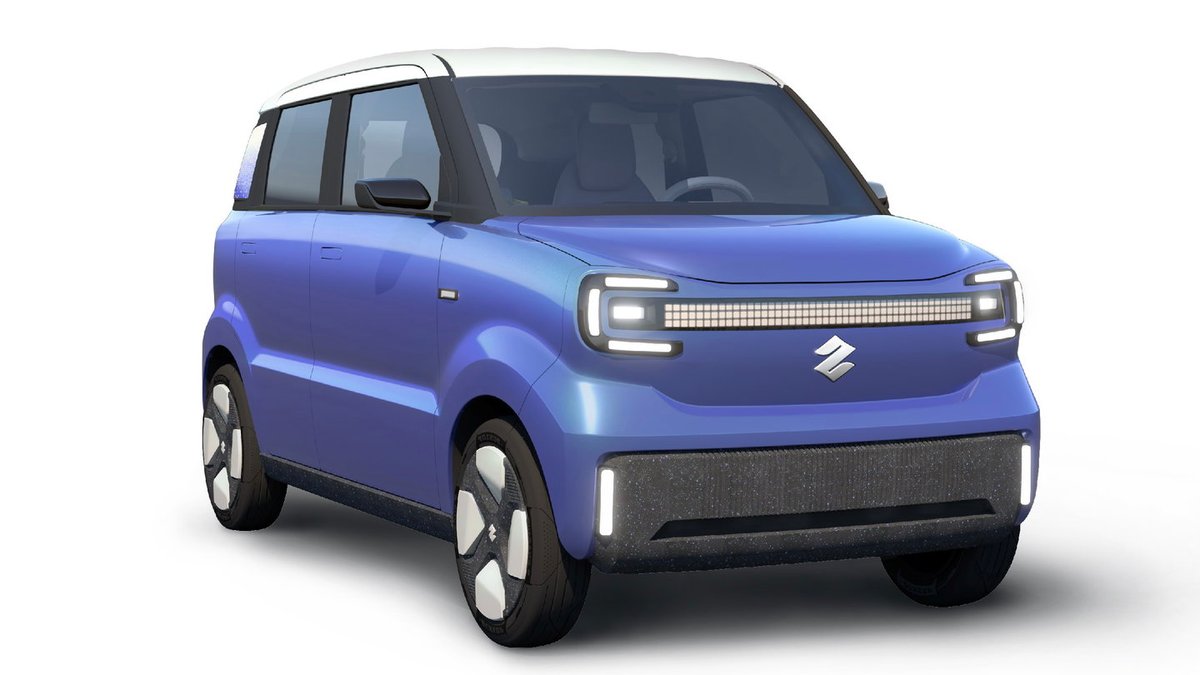
Japanese kei cars are inching closer to the British market, as Suzuki prepares to launch an electric rival to the upcoming Honda Super-N. These tiny, city-focused vehicles have historically struggled to gain traction outside of Japan, but European officials are now considering regulations that could open the door for more affordable electric options. Suzuki UK’s director David Kately confirmed to Autocar that the company will introduce a new A-segment electric vehicle next year, describing it as a “vitally important” addition to their lineup.
The new Suzuki model is widely expected to be a production version of the Vision e-Sky concept, which debuted at the Tokyo Motor Show last year. If it arrives as planned, it will compete directly with the Honda Super-N, which recently landed in the UK starting at £18,995. The Super-N is technically larger than a strict kei car, as its boxy design pushes it over the maximum width limit while still offering up to 94 horsepower when in Boost mode.
Related: Clarke Monza Portable Compressor Boosts Everyday Tasks
David Kately noted that this vehicle represents a different segment for Suzuki, but he remains confident in its potential success. “It’s an entrant in a different segment for us and I’m very excited about its prospects,” he stated. The company is banking on the fact that British drivers are increasingly seeking out smaller, more economical electric vehicles as they handle rising costs and tighter city parking.
Unlike the rest of Europe, the UK drives on the left, which means Japanese manufacturers face significantly lower costs when re-engineering right-hand drive vehicles for the British market. This is a major factor in why Britain is currently the only European country receiving the Honda Super-N. The British government’s Zero Emission Vehicle mandate adds another layer of pressure on automakers to sell more electric models, creating a specific environment where small, efficient cars can thrive.
Related: Alicia Silverstone’s Engagement Ring: Shining with Ethical Beauty through Lab Grown Diamond Rings
European regulators are also looking at “E-Car” regulations that could further shape the future of small vehicle production. These rules would mirror kei car restrictions but focus on manufacturing within the EU, potentially influencing the design and availability of future small electric cars. This shift suggests a broader trend where affordable, characterful vehicles are returning to the market after years of dominance by larger, more expensive models.
Other automakers are already following this path, with the reborn Renault Twingo and the upcoming Citroën 2CV revival leading the charge. As manufacturers pivot to meet new regulations and changing consumer preferences, the era of oversized, expensive family sedans may be drawing to a close. The arrival of these compact electric cars offers a welcome alternative for drivers who want to keep running costs low without sacrificing the practicality of a modern vehicle.


