
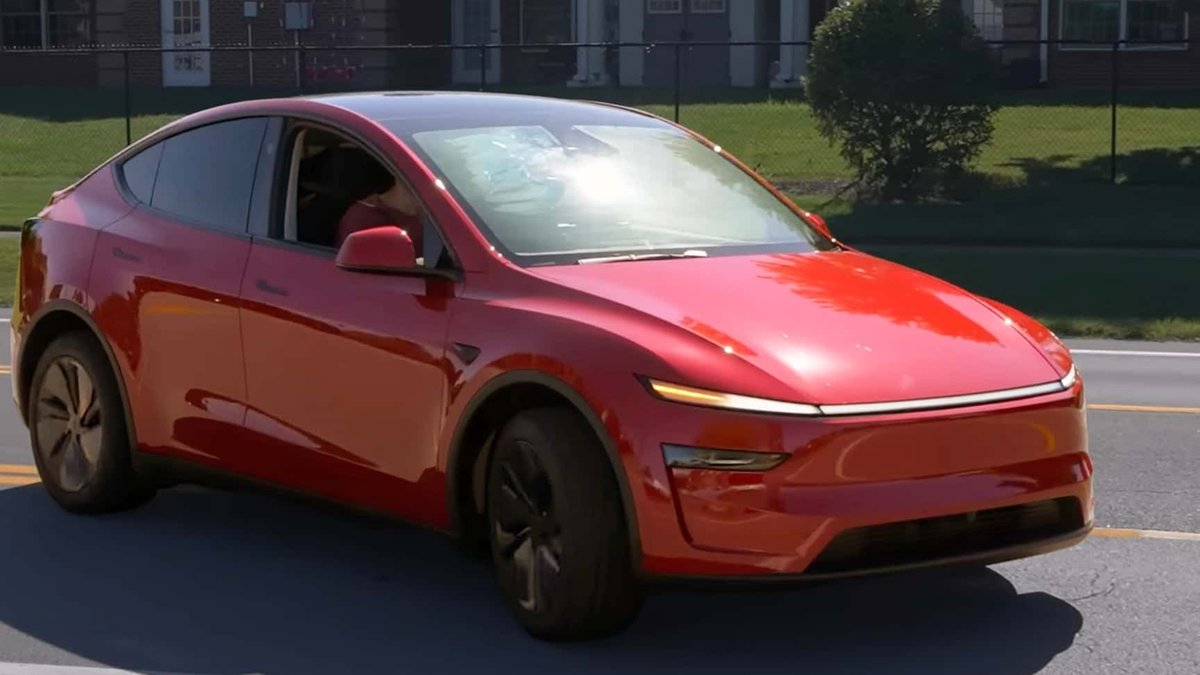
After one year and 25,000 miles, a 2026 Tesla Model Y Premium lost about 9% of its battery health. The owner isn’t worried, and the data behind the degradation suggests his confidence may be well-placed. While a 9% drop in capacity might sound alarming at first glance, the context of how electric vehicle batteries age reveals a more subtle picture—one where early losses often don’t translate to long-term problems.
A third-party estimate puts the battery at 91% health
YouTuber Andy Slye checked his Model Y’s battery health using Recurrent, a service that estimates degradation by analyzing vehicle data. The app recorded a 91% state of health after 12 months of ownership, a figure derived from a combination of real-world metrics rather than a single diagnostic snapshot. Recurrent’s methodology relies on aggregating data points such as charging frequency, depth of discharge, ambient temperatures during operation, and the vehicle’s reported range over time. These inputs are then cross-referenced with a database of similar vehicles to generate an estimated capacity loss.
The service’s approach differs from Tesla’s built-in diagnostics, which include a more rigorous but time-consuming overnight test. That procedure requires the car to remain connected to an AC charger for over 16 hours while the battery undergoes a full discharge and recharge cycle, providing a precise measurement of its current capacity. Slye opted for the quicker in-app check, which, while less detailed, still returned a “healthy” verdict. The distinction between the two methods highlights a trade-off: convenience versus granularity. Recurrent’s estimate, though not as exact as Tesla’s full test, offers a practical way for owners to monitor battery health without dedicating an entire day to diagnostics.
Despite the reported 9% loss, Slye’s Model Y demonstrated strong real-world performance. During a highway range test, he drained the battery from full to empty while maintaining interstate speeds, covering nearly 300 miles. This result aligns with Tesla’s official EPA-estimated range but also shows how degradation manifests in everyday use. An 80% daily charge, which many EV owners adopt to prolong battery life, would still yield around 240 miles—a figure that exceeds the average American’s daily driving needs. For Slye, this margin provides a buffer that eliminates range anxiety, even if the battery’s raw capacity has diminished slightly from its original state.
Early degradation is normal, and the curve flattens later
Most electric vehicles lose battery capacity fastest in their first few years, a trend that reflects the chemical and structural changes lithium-ion cells undergo during initial use. The result is consistent with what is considered normal degradation for a nickel-based long-range Tesla like Slye’s. These cars seem to experience their largest decline during the first two to three years or 50,000 miles.
Related: Chinese EV maker mimics Mercedes’ divisive ad
Slye’s Model Y has spent its first year in Kentucky, a state with a temperate climate that avoids the extremes of desert heat or Arctic cold. Battery degradation accelerates in consistently hot environments like Arizona, where high temperatures increase the rate of chemical reactions within the cells. Conversely, frequent exposure to subzero temperatures can temporarily reduce range and, over time, contribute to long-term capacity loss. By operating in a moderate climate and relying primarily on home charging, Slye’s vehicle has likely avoided some of the stress factors that exacerbate early degradation. Superchargers, while convenient for long trips, deliver high-voltage direct current that generates more heat than slower Level 2 charging, which may explain why limiting their use could help preserve battery health.
Other Teslas suggest the early drop doesn’t predict long-term performance. A three-year-old Model 3 taxi, subjected to high daily mileage and frequent charging, retained 88.5% capacity, demonstrating that even intensive use doesn’t necessarily lead to catastrophic degradation. Similarly, a 2015 Model S P85D with nearly 160,000 miles still had 86% health, a sign of the durability of Tesla’s older battery packs. These examples illustrate that while the first 25,000 to 50,000 miles may see the steepest decline, the rate of loss tends to taper off significantly afterward.
Battery health isn’t just about mileage. Temperature management plays a critical role, as both extreme heat and cold can degrade cells over time. Charging habits also matter: frequent fast charging, deep discharges, or keeping the battery at a high state of charge for extended periods can all accelerate wear. Even software updates can influence degradation, as Tesla occasionally adjusts charging algorithms to optimize battery longevity. What appears as a steep early decline often stabilizes as the battery’s chemistry and the vehicle’s management systems adapt to real-world conditions. This stabilization phase can last for years, with many EVs maintaining 80% or more of their original capacity well beyond 100,000 miles.
Slye’s experience isn’t unusual, but it serves as a case study in how battery degradation unfolds in practice. While manufacturers and regulators often focus on lab-tested capacity figures, real-world range is shaped by variables like driving style, climate, and charging infrastructure. His Model Y still delivers enough miles for daily use, and that practical utility—rather than an abstract percentage—is what ultimately defines the ownership experience. For most drivers, the difference between 91% and 100% health is negligible in everyday scenarios, especially when the vehicle continues to meet their needs without requiring adjustments to their routine.


