
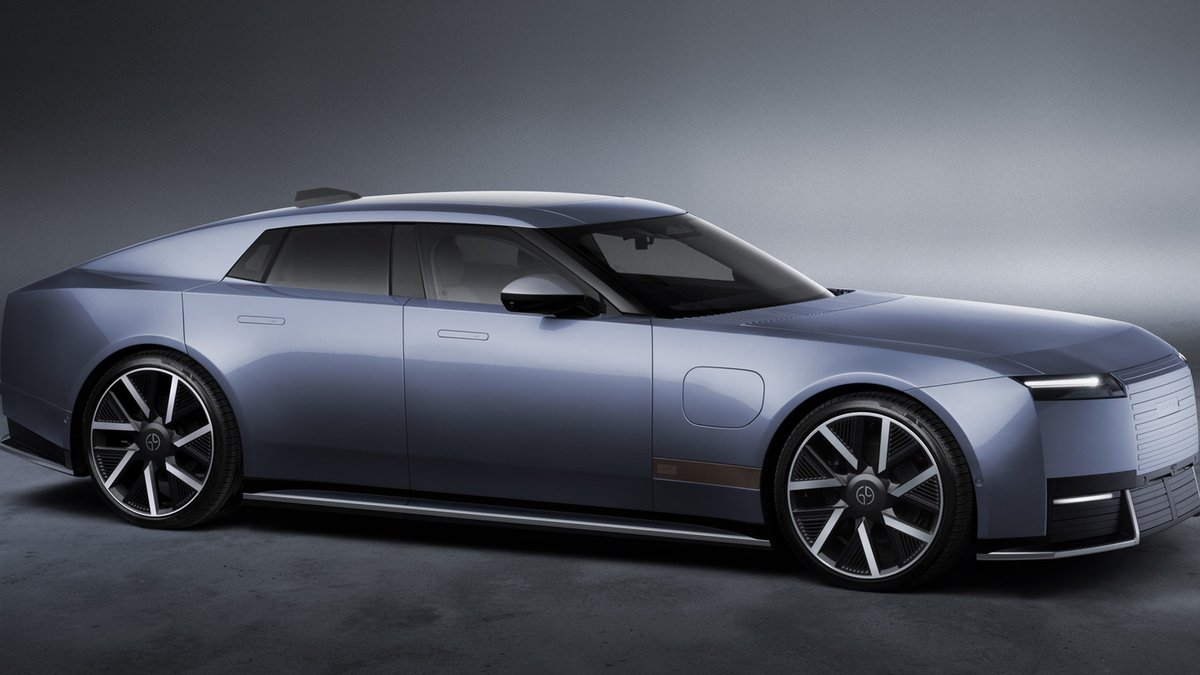
Jaguar unveiled the production Type 01 electric vehicle in New York City, marking a significant shift for the brand with its bold design and advanced engineering. The automaker positioned the Type 01 as a four-door GT with a drag coefficient of 0.23 cD, achieved through over 7,000 wind tunnel tests. The vehicle measures 208 inches in length and 55 inches in height, making it 9 inches longer and an inch lower than the Porsche Panamera. Its dramatic roofline and lack of a traditional grille, replaced by an angular ribbed panel with the new Jaguar wordmark, set a new aesthetic direction for the brand.
Design Innovation and Engineering Challenges
The Type 01’s most controversial design feature is its Impossible Panel, a complex body panel spanning the roof, C-pillar, and rear quarter. Jaguar claims this panel defies industry norms by incorporating more than three planes with acute angles, requiring a six-step cold-forming process under 2,500 tons of pressure. The process took engineers 1,500 hours to perfect, yet it does not delay production. The car’s 23-inch wheels remain consistent with the concept, emphasizing its imposing presence.
Inside, the cabin features a minimalist design with a 24-inch OLED display for the gauge cluster and a 7-inch touchscreen on the center console for climate and media controls. A Panoramic Soundbar with 13 speakers integrates into the dashboard, part of a 38-speaker Meridian audio system. The rear-view camera replaces the traditional rear window, while the hydrophobic lens on the shark fin ensures clear visibility in adverse weather. Cargo space totals 15.9 cubic feet, expanding to 35 cubic feet with folded rear seats.
Performance and Charging Capabilities
The Type 01 is powered by a tri-motor setup with a 118-kWh lithium-ion battery pack, delivering up to 1,015 horsepower and 1,007 pound-feet of torque. It accelerates from 62 mph to 112 mph in 4 seconds, with a 0-62 mph time of 3.2 seconds. Fast-charging capability allows adding 200 miles in 13 minutes via an 850-volt architecture, supporting DC 350 kW charging. The vehicle’s 50:50 weight distribution and dynamic air suspension enhance handling, while rear-wheel steering improves maneuverability to match a BMW 3 Series.
Jaguar also introduced split-charging capability, enabling the Type 01 to utilize either 400-volt or 850-volt charging standards. The AC port is located on both front fenders, with DC charging available on the passenger side. The thermal management system ensures consistent performance in extreme conditions. Despite its size and power, the car’s curb weight is reported to be around 6,000 pounds, a figure confirmed by outlets testing prototypes.
The automaker plans to launch the Type 01 in early 2027 in the U.S., with a starting price of $130,500. Three interior color schemes inspired by travertine stone—The Light Story, The Dark Story, and The Original Story—offer customization options with leather or Ultrafabrics NeoGrain. The rear seats feature heating and cooling, while the front seats include a hot stone massage function.
Interior Technology and Charging Infrastructure
The Type 01’s 24-inch OLED display serves as the primary gauge cluster, presenting driver information with exceptional clarity. A separate 7-inch touchscreen on the center console handles climate and media functions, maintaining a clean dashboard aesthetic. Rear passengers receive their own matching screen for entertainment during longer journeys.
This configuration creates what Jaguar describes as “a wall of sound” throughout the cabin. The rear-view camera feed appears on a black rectangle positioned at the base of the windshield, mounted within the soundbar assembly.
A hydrophobic lens covers the shark fin camera mount, ensuring visibility remains clear during inclement weather conditions. The camera system replaces the traditional rear window entirely, contributing to the vehicle’s aerodynamic profile. Multiple cargo floor levels provide organized storage solutions within the 15.9 cubic feet of available space.
Market Positioning and Exclusivity Options
The Light Story, The Dark Story, and The Original Story offer distinct aesthetic approaches using either leather or Ultrafabrics NeoGrain materials. Kvadrat woolblend textiles made from recycled materials cover the flooring throughout the cabin.
The Original Story designation represents the first “Curated by Jaguar Design Vision edition” offering. Colorful embroidery decorates headrests while bright accents appear in storage pockets and trim pieces. Front seats include a hot stone massage function alongside their 12-way adjustment capability.
Standard 21-inch wheels differentiate from the optional 23-inch specification, providing a more conservative appearance choice. The Light Story interpretation uses lighter travertine-inspired materials throughout the cabin space. Rear seats incorporate both heating and cooling capabilities for passenger comfort.
The base model likely excludes destination charges from this figure. Competitively, this positions the Type 01 below the Porsche Taycan 4S while exceeding the Lucid Air Grand Touring by approximately $15,000.
A 60-unit Chromatic Moments collection offers rare color options including French Ultramarine and London Red. The Ultramarine variant draws inspiration from Renaissance painting techniques. London Red celebrates the brand’s British heritage through its chromatic selection.
Exterior Design Elements and Production Details
The Type 01 features the thinnest headlights ever fitted to a Jaguar, integrating 17,000 pixels into a 3.3-inch height with advanced cornering and projection technology. The traditional grille is replaced by an angular ribbed panel displaying the new Jaguar wordmark, complemented by active cooling vans in the lower bumper. The front fascia adopts a feline aesthetic while maintaining bold, straight lines and curvy elements reminiscent of classic Jaguars.
The rear design eliminates the traditional window in favor of a camera mounted in the roof shark fin, paired with a hatchback panel housing the CHMSL and Jaguar branding. Over a dozen strakes form a distinctive visual graphic, with full-width taillights concealed between them, developed through 4,000 hours of engineering. The hatchback’s trim and strakes emphasize the car’s futuristic silhouette while echoing Jaguar’s heritage.
Side windows appear unusually small, with door openings tighter than comparable models like the Porsche Taycan and Mercedes-AMG GT. The Impossible Panel’s cant rail design employs a compressed-radius hemming technique to conceal glass seals, eliminating the need for cosmetic trims and enhancing the concept car’s appearance. This approach contributes to the vehicle’s dramatic proportions and streamlined exterior.
Jaguar describes the floor as having multiple levels with underfloor storage and front-to-rear strikethrough detailing. The frunk, however, is limited to housing essential emergency kits, falling short of the storage potential implied by the elongated hood.


