
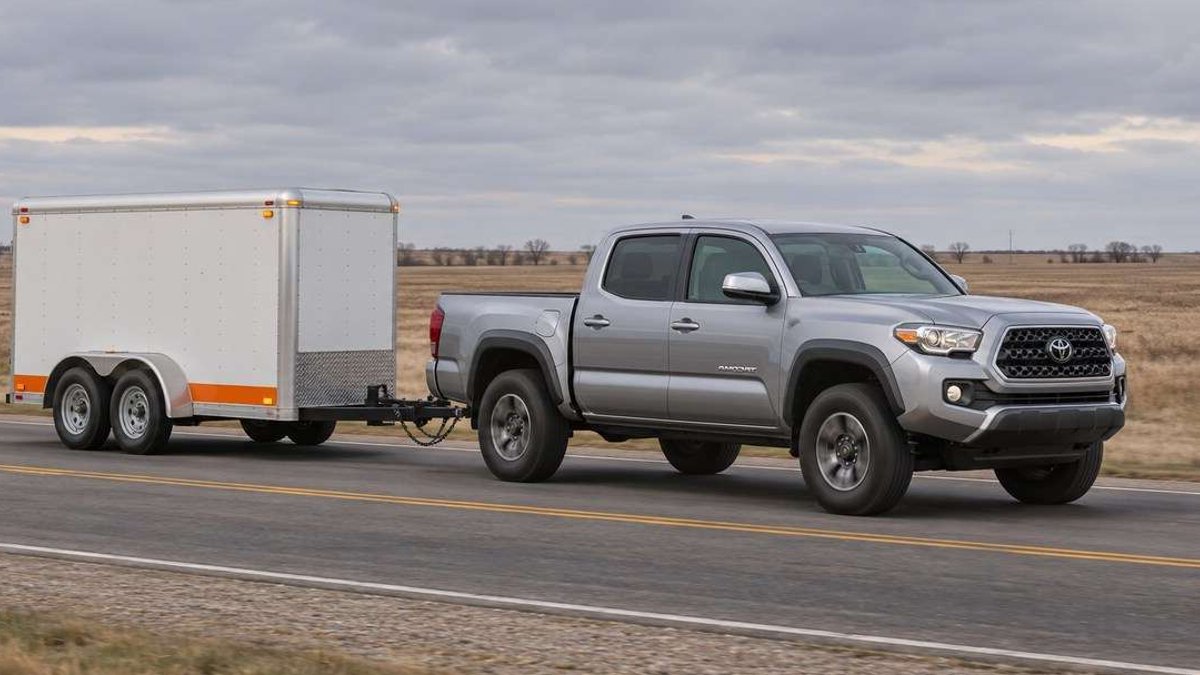
A Toyota Tacoma driver’s experience of towing a 12-foot U-Haul trailer across the country highlights the importance of accurate fuel economy estimates. Prior to renting the trailer, the driver sought advice from fellow Tacoma owners on what to expect in terms of fuel efficiency, with most suggesting around 12 MPG. After covering 1,100 miles, the driver reported an actual fuel economy of 11.6 MPG, which was relatively close to the initial estimate. However, the driver’s decision to wait until the low-fuel light came on before refueling proved to be a critical mistake.
The driver later cautioned others, saying “Don’t wait (like I did) for the low fuel light,” and advised starting to look for fuel when the tank is a quarter full. This experience led the driver to adopt a new approach, aiming to refuel every 200 miles or so. Although the post does not provide detailed information on fuel consumption at each stop or the remaining mileage when the low-fuel warning was triggered, it serves as a valuable lesson for others planning similar trips.
Comparing Estimates to Real-World Results
A photograph accompanying the original post shows the Tacoma hitched to the enclosed rental trailer at night, but it lacks key details such as the truck’s model year, engine type, loaded trailer weight, and typical cruising speed. The reported 11.6 MPG figure is based on an update provided during the trip and should be considered a provisional estimate rather than a definitive average. This figure can still be useful for planning purposes, but it is essential to recognize its limitations.
Calculations based on the reported mileage suggest that the first 1,100 miles would have required approximately 91.7 gallons of fuel at 12 MPG, compared to around 94.8 gallons at 11.6 MPG. Assuming a fuel price of $3.50 per gallon, this translates to a difference of about $11, which is relatively minor and indicates that the initial estimate was reasonably accurate. However, the driver’s actual experience highlights the potential risks of relying solely on average fuel economy estimates.
The reported 11.6 MPG implies an additional $11 in fuel costs compared to the estimated 12 MPG over the 1,100-mile distance, assuming a fuel price of $3.50 per gallon. This discrepancy may seem minor, but it can become more significant on stretches with limited fueling options. For instance, a 150-mile leg of the journey would have consumed around 12.9 gallons at 11.6 MPG, compared to 15 gallons at 10 MPG, demonstrating how average fuel economy estimates can be misleading in certain situations.
A stretch of road with few convenient fueling stations can make the average fuel economy estimate seem overly optimistic. In such cases, a driver who plans their stop based on the whole-trip average may end up using an extra two gallons of fuel on that particular stretch. Furthermore, the availability of fueling stations and their accessibility with a trailer in tow are critical factors to consider when planning stops.
Read Also: Early Ford Mavericks Lose Warranty, Owner Trades 80k
Planning Fuel Stops Strategically
A separate report from a Ford F-150 driver, who achieved 10 MPG while towing a 27-foot camper over 1,500 miles, illustrates a similar challenge in budgeting for fuel. A whole-trip average can be useful for estimating total fuel requirements, but it is less helpful when choosing where to stop for fuel.
The aerodynamic characteristics of an enclosed trailer, such as the 12-foot U-Haul, play a significant role in determining fuel economy. The trailer’s large, flat surface presents considerable drag, especially at highway speeds, which can substantially reduce fuel efficiency. While the Tacoma driver did not report wind speed or identify a specific cause for the reduced fuel economy during the Kansas stretch, the aerodynamic penalty of towing a large, boxy trailer is a well-known factor in long-distance towing.
According to U-Haul’s specifications, the enclosed 6-by-12 cargo trailer weighs 1,920 pounds when empty, with a maximum cargo load of 2,480 pounds and a maximum loaded trailer weight of 4,400 pounds. However, these figures are based on the rental model‘s specifications, not the actual weight of the trailer during the trip. U-Haul also recommends a maximum speed of 55 mph for the trailer, although the driver’s actual speed was not reported.
Understanding the Specifics of the Load
An enclosed rental trailer does not need to be fully loaded to have a significant impact on fuel economy due to its shape and size. Without detailed information on the weight, wind, and speed for either trip, it is challenging to make a direct comparison between the two trucks. A report from a separate F-150 PowerBoost trip, which achieved 8.9 MPG with a cargo trailer over 148 miles, further illustrates the complexity of estimating fuel economy when towing.
A useful comparison was provided by a driver who reported the fuel economy of their 2021 Tacoma Off-Road towing a 6-by-12 trailer, both empty and loaded with a sofa. The results showed a decrease in fuel economy from 12.5 MPG when empty to 11.2 MPG when loaded, although the exact gallon totals and the conditions of the two legs of the trip were not specified.
Preparation is Key
When planning a long towing trip, it is key to start by determining the usable fuel for each leg of the journey. If the last comparable trip achieved 10 MPG, it is better to plan the next remote stretch using this figure rather than relying on a better average from the rest of the trip. Leaving enough fuel to reach an alternate stop is also essential.


