
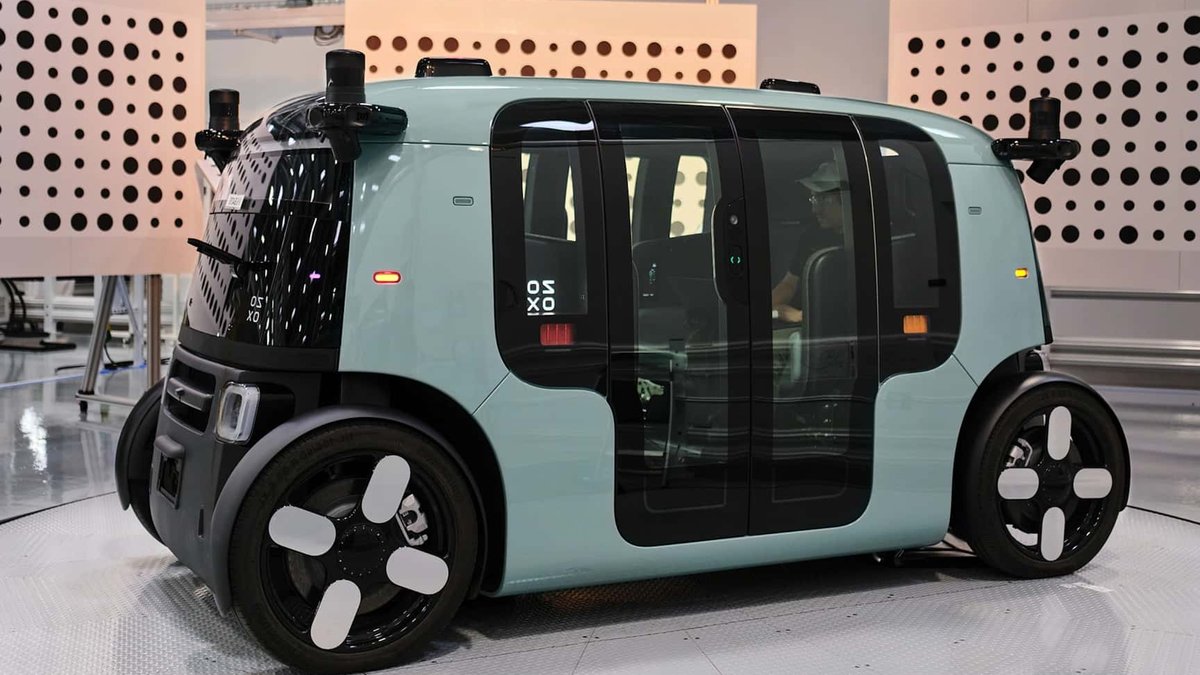
U.S. regulators have granted Amazon‑owned Zoox a temporary exemption that allows its steering‑wheel‑free robotaxis to carry paying passengers, marking the first time a purpose‑built autonomous vehicle has cleared federal motor‑vehicle safety standards for commercial use.
The National Highway Traffic Safety Administration (NHTSA) announced the exemption on Thursday, specifying that Zoox can deploy up to 2,500 vehicles per year for two years.
The approval applies to the company’s unique pods, which lack traditional steering wheels, brakes, side mirrors and pedals. Under the new rules, Zoox must operate within an “enhanced, adaptable oversight structure” that can evolve as its technology matures.
Zoox has already run free rides in limited zones of Las Vegas and San Francisco. With the exemption, the firm intends to begin charging fares in Las Vegas next month, pending state‑level permits from California’s Department of Motor Vehicles and Public Utilities Commission.
The company says it is “working closely with regulators” in both states to meet local requirements.
Unlike Waymo, which retrofits Jaguar I‑Pace electric SUVs, or Tesla’s upcoming Robotaxi service that relies on Model Y sedans, Zoox builds its own vehicles in California.
Related: Genesis unveils first performance model at $71,495
The pods feature two rows of bench seats facing each other and are bidirectional, meaning they can travel forward or backward without turning around. This design eliminates the need for a driver’s cockpit, a choice that has long set Zoox apart from other autonomous‑driving ventures.
Other firms have pursued similar exemptions. General Motors’ Cruise attempted to secure approval for its Origin shuttle but never succeeded, while Tesla will need comparable clearance for its Cybercab, which also omits a steering wheel and pedals.
While the federal exemption removes a major hurdle, state and local rules still create a patchwork of compliance obligations. Companies must manage varying licensing, insurance and testing standards, a situation that has slowed broader adoption of driverless services.
The NHTSA’s recent interim final rule, which allows vehicles built before an exemption to become eligible for commercial deployment, aims to simplify part of that process.
In a brief statement, NHTSA Administrator Jonathan Morrison said the agency “supports the safe development and deployment of automated vehicles.” He added that removing “unnecessary barriers to innovation” while maintaining “strong enforcement oversight” is intended to keep the United States at the forefront of autonomous‑vehicle technology.
Safety remains the priority.
Related: Top Used Sports Cars for Every Budget
The agency announced a three‑year funding partnership with the SAE Industry Technologies Consortia to develop unified national standards for autonomous vehicle performance and safety. The move reflects a broader push to harmonize regulations that currently differ from one jurisdiction to another.
Given the novelty of the exemption, a cautious rollout is expected. Zoox will likely monitor its fleet closely, adjusting operations as data on safety and reliability accumulates.
If the pilot in Las Vegas proves successful, the firm could seek similar approvals in other markets, though each will still require local licensing.
The exemption’s two‑year limit suggests regulators want to observe real‑world outcomes before deciding on a longer‑term framework. Should Zoox demonstrate consistent safety records, the temporary cap may be extended or converted into a permanent rule, potentially opening the door for other firms to follow suit.
For now, the focus remains on delivering a paid service that meets both federal and state expectations. The next few months will reveal whether Zoox’s unconventional pods can attract riders willing to forgo a traditional driver‑cabin in exchange for a novel, fully autonomous experience.


