
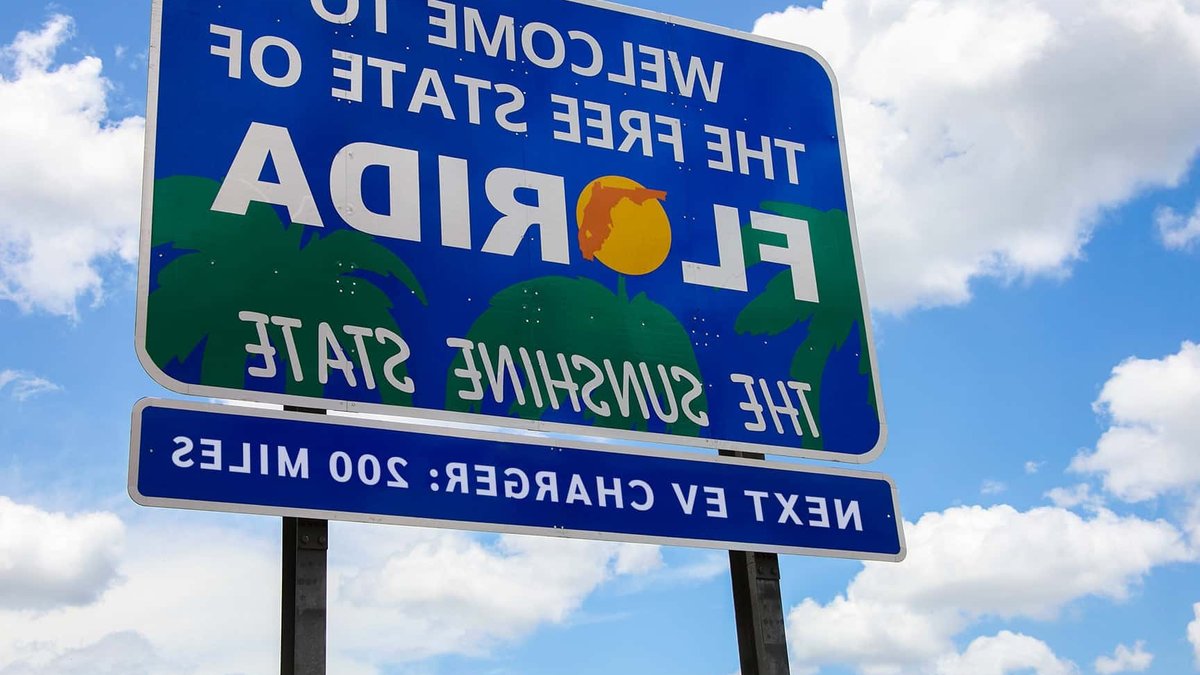
Florida received $198 million from the Biden administration’s National Electric Vehicle Infrastructure program to build out federally funded public fast chargers across the state. Now it wants to spend that money on infrastructure for electric air taxis instead, according to a new investigation.
The Florida Department of Transportation plans to use the funds to build an Aerial Highway Network, which would complement the state’s existing transportation system and help ease congestion.
These aircraft, known as electric vertical take-off and landing vehicles, or eVTOLs, are still in an early stage of development and haven’t been commercially deployed as air taxis anywhere in the U.S.
Joby Aviation, one of the frontrunners in the space, ran week-long test flights in New York City this April.
The plan calls for charging infrastructure that could recharge eVTOLs at 32 “vertiports,” where the vehicles take off from and land, with each site costing roughly $5.6 million.
Locations for these sites would include luxury apartment buildings, golf courses, military bases, and airports.
The state’s justification for skipping EV chargers is that private companies have already built out much of America’s public fast-charging network.
The number of EV charging ports in Florida has doubled in the last four years, and the state has 452 fast-charging stations.
This doesn’t make NEVI funding redundant, as the federal program was designed to fill gaps that private companies can sometimes overlook, such as rural communities where charging stations may not turn quick profits.
In New York, some Evolve NY public fast-charging stations were built using NEVI funds and have propped up in rural parts of the state where charging had long been sparse.
These Evolve NY chargers have been a lifesaver in areas that used to be charging deserts a few years ago.
Related: GWM launches new 3.0L turbo-diesel engine
Florida has largely left its share of the funds untouched, while many other states have started awarding their allocated NEVI funds to contractors and charging companies to fill critical gaps in America’s energy infrastructure.
Under NEVI, once states fulfill their obligations to build out chargers along highways, they can redirect leftover funds to other charging needs.
The Federal Highway Administration has reviewed Florida’s infrastructure along major corridors and approved it as fully built out.
Florida has become one of the most vocal critics of federal EV policies, with state leaders frequently portraying EVs as part of a political agenda.
Instead, Florida wants to spend federal EV infrastructure dollars on technology that has yet to receive any FAA certification for commercial operations.
The early beneficiaries of these eVTOLs could likely be a relatively small and wealthy segment of the population rather than everyday Floridians, based on the proposed locations.
Florida’s decision to redirect funds to eVTOL infrastructure could have long-term consequences for the adoption of EVs in the state.
It will be important to see how this decision plays out in the coming years.
The Environmental Protection Agency estimates that cleaner vehicle emissions standards would prevent roughly 40,000 premature deaths and tens of thousands of hospitalizations over time by reducing transportation-related air pollution.
Florida’s move is notable.


