
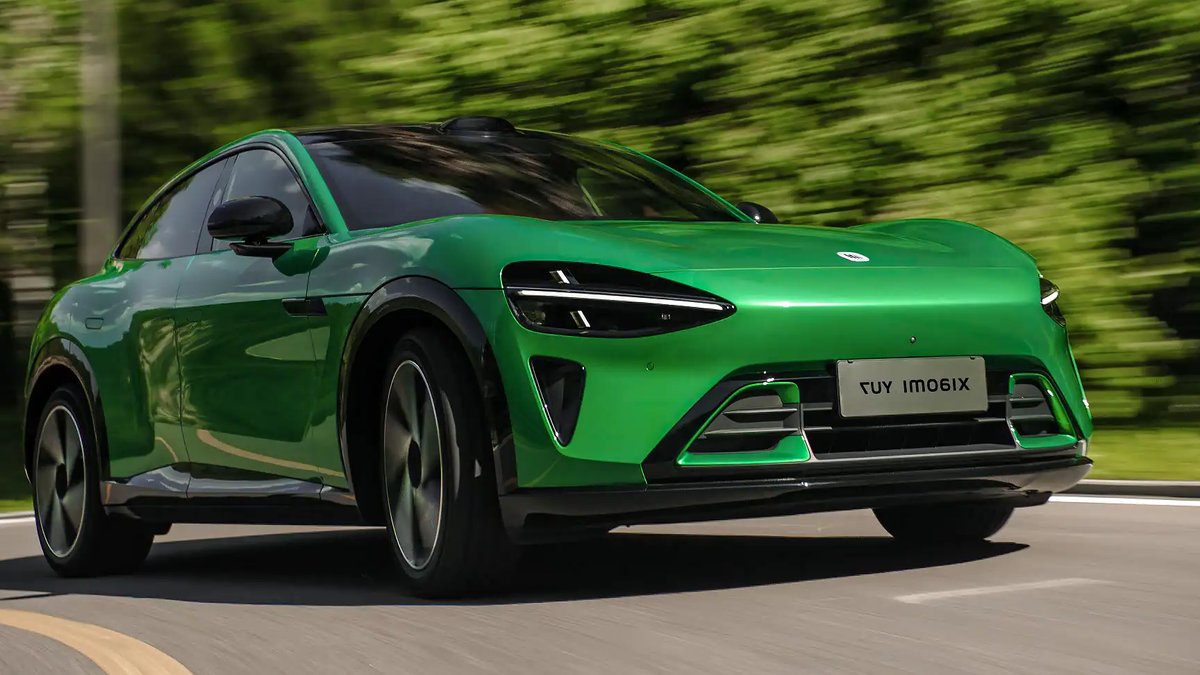
Xiaomi, the Chinese technology company famous for its smartphones, plans to enter Australia’s electric vehicle market—but customers will face significant delays. The firm has announced its EVs will reach local dealerships no earlier than 2028, following a recruitment drive for Sydney-based positions in legal compliance, local regulations, and financing. This shift coincides with Xiaomi’s pivot away from its struggling home market toward global expansion.
The brand’s initial lineup will feature the SU7 sedan and YU7 SUV, direct competitors to Tesla’s Model 3 and Model Y, respectively. Both models will be offered in right-hand drive configurations, though Xiaomi will launch first in left-hand drive markets, beginning with Germany in late 2027. The company has also developed high-performance variants, including the YU7 GT, which recently broke the Nurburgring lap record for SUVs, and the SU7 Ultra, boasting a 0-100 km/h acceleration time of 1.98 seconds and a top speed of 350 km/h.
Unlike competitors such as BYD and MG, which entered Australia with affordable models, Xiaomi will target mid-to-high-end pricing before exploring lower-cost segments. This approach mirrors its strategy in Europe, where it operates a technical center in Germany and has hired former BMW M engineers to enhance its performance lineup.
Financial challenges explain why Xiaomi’s Australian debut remains years away. In the second quarter of 2026, the company incurred an average loss of AUD$5,300 per vehicle, an improvement from AUD$7,960 three months earlier but still far above the AUD$800 loss per car recorded in late 2024. These losses fall under “other new initiatives” in financial disclosures, though automotive operations are likely the main factor. Despite ranking as China’s ninth-best-selling car brand in September, driven by strong sales of the SU7 (12th place) and YU7 (30th place), its automotive division remains unprofitable.
In the near term, Xiaomi’s focus remains on Europe, where it is testing demand. The company has also introduced the Skynomad N70 and N90, hybrid SUVs with petrol range extenders, in China, signaling potential future flexibility in its lineup.


