
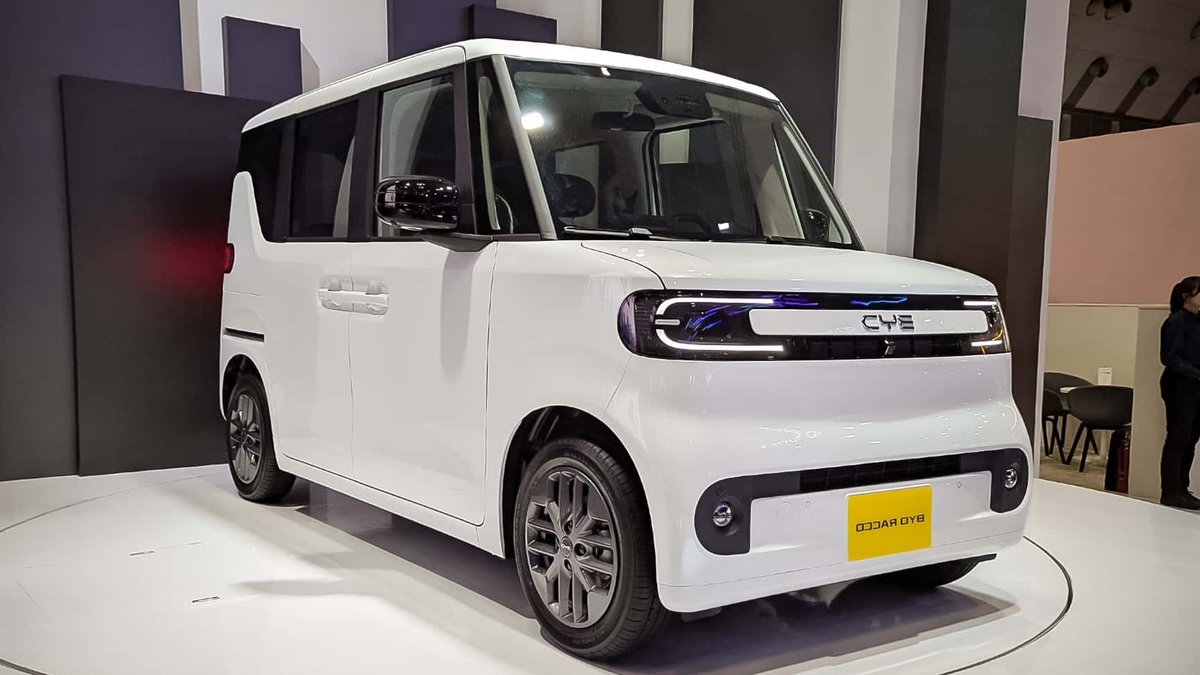
The Chinese automaker BYD has unveiled its first kei car, a segment long dominated by Japanese brands like Toyota, Nissan, and Honda. The new electric vehicle, called the Racco, is designed specifically for Japan’s domestic market and comes with features that outpace many of its local competitors.
Built for Japan’s tight streets and tight budgets
Kei cars—small, boxy vehicles with strict size and engine regulations—have been a staple in Japan for decades. Their compact dimensions make them ideal for handling narrow urban streets, and their lower taxes and fees keep ownership costs down. Last year, nearly 1.6 million kei cars were sold in Japan, accounting for more than a third of the country’s 4.5 million new car sales.
BYD’s entry into this space is a direct challenge to established players. The Racco isn’t just another EV; it’s a ground-up redesign tailored for Japanese drivers. Powered sliding doors, a rarity in the segment, and bidirectional charging—allowing the car to power external devices—set it apart from rivals like the Nissan Sakura and Honda N-One E.
Related: GWM launches new 3.0L turbo-diesel engine
Range and price undercut the competition
The Racco will offer two battery options: a 22.4 kWh pack with 130 miles of WLTP range and a 35.8 kWh version capable of 199 miles. The larger battery surpasses the Nissan Sakura’s 180-mile range and matches or exceeds other EVs in the segment. Fast-charging support at up to 100 kW also outpaces competitors, reducing downtime for drivers.
Pricing starts at just under 2 million yen (about $11,900 before taxes and incentives), significantly cheaper than the Sakura’s 2.4 million yen ($14,600) base price. Standard features include a 10.1-inch touchscreen, digital key access, and heated front seats and steering wheel—amenities that often come as upgrades in rival models.
For BYD, the Racco is more than a new product; it’s a foothold in a market where the company has struggled to gain traction. Last year, BYD sold just over 3,000 cars in Japan, a fraction of its global sales. If the Racco succeeds, it could force Japanese automakers to accelerate their own EV plans—or risk ceding ground in a segment they’ve controlled for generations.
Related: Alicia Silverstone’s Engagement Ring: Shining with Ethical Beauty through Lab Grown Diamond Rings
The car’s success may hinge on how well it adapts to Japan’s unique driving culture. Kei cars aren’t just about price; they’re about practicality, maneuverability, and even a kind of national identity. Whether BYD can convince Japanese buyers that a Chinese-made EV belongs in that tradition remains an open question. The company’s aggressive pricing and feature set suggest it’s betting big on the answer being yes.
Deliveries are expected to begin later this year, with no word yet on whether BYD plans to expand the Racco’s availability beyond Japan. For now, the automaker is focused on proving it can compete where it matters most: on home turf.


