
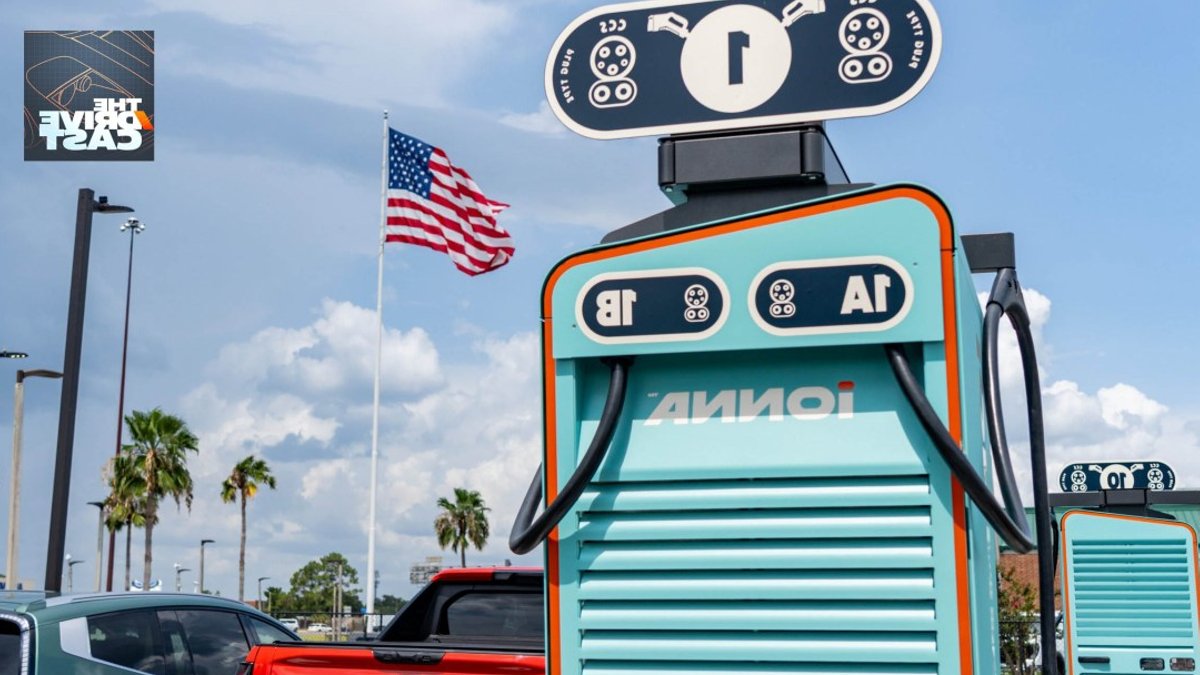
America’s electric vehicle charging network suffers from broken promises, delayed deployments, and persistent reliability failures that have frustrated drivers and forced automakers into a reactive scramble. With 5.7 million electric vehicles on U.S. roads, the country’s charging infrastructure remains woefully insufficient—only 250,000 public chargers exist nationwide, and just 73,000 of those are high-speed DC fast chargers capable of delivering an 80% charge in under 30 minutes. The issue extends beyond sheer numbers to operational failures: malfunctioning equipment leaves drivers stranded, pushing many to rely on Tesla’s Supercharger network despite its proprietary limitations.
Why EV Charging Lags Behind Gas Stations
The industry’s slow progress stems from technical challenges, regulatory bottlenecks, and a lack of standardized maintenance protocols. Unlike gas stations, which evolved over decades, EV charging infrastructure remains in its early stages—17 years after the first public chargers appeared in 2007. Deploying high-power systems at scale presents unique difficulties. “You’re trying to deploy an energy or power density in a footprint that people are normally used to deploying for a mall,” explains Seth Cutler, CEO of Ionna, a joint venture backed by BMW, Mercedes-Benz, General Motors, Honda, Hyundai, Kia, Stellantis, and Toyota.
The urgency of the situation cannot be overstated. Without a dependable charging network, EV adoption risks stalling. To address this, Ionna was established in 2022 with a mission to install 30,000 chargers across 2,000 stations by 2030, a direct challenge to Tesla’s dominance. Since taking the helm in 2023, Cutler has steered the company toward a singular focus: ensuring chargers function reliably when drivers need them. “We’re not working on battery storage right now,” he states.
Early results show cautious momentum. Ionna launched its first site in February 2023 and now operates 185 stations, with 100 more under construction and 600 contracted in total. By the end of 2024, the company expects over 200 live stations, a 150% increase from January. In Florida, it has already become the third-largest provider of high-power chargers, trailing only Electrify America. Unlike competitors, Ionna avoids unnecessary amenities, instead concentrating on uptime and geographic coverage. “We’ve more than doubled the network in the last nine months, and we’ll have well over 200 sites live by the end of the year,” Cutler notes.
Reliability Becomes the Make-or-Break Factor
The core difficulty lies not in building stations but in maintaining them. Rivian’s RJ Scaringe has identified Tesla’s Supercharger network and Rivian’s Adventure Network as the only consistently reliable options in the U.S., a claim Ionna disputes. The company’s growth suggests it may yet meet its 2030 targets, provided the industry resolves its fundamental flaw: a system still plagued by unreliability.
Read Also: Ford Mustang Dark Horse SC Impresses
Ionna’s expansion strategy balances high-density hubs with targeted geographic placement. Most current stations feature four to six chargers per location, but future sites will increase capacity to eight bays, double the industry average, while focusing on areas where drivers lack reliable access. For instance, in Florida, where Ionna ranks third in high-power chargers, the company has avoided over-saturating Orlando. Instead, it prioritizes corridors like Interstate 75, where long-distance EV travel remains problematic.
The shift toward larger stations also tackles a persistent industry issue: underutilized chargers. Early fast-charging networks, including Electrify America, often installed stations with insufficient bays, creating congestion and frustration. Ionna’s data reveals that stations with six or more chargers achieve up to 30% higher utilization rates by reducing wait times. Florida sites, averaging five chargers, already outperform rivals in driver satisfaction. By 2027, Ionna will test eight-bay stations in high-traffic markets like Dallas and Atlanta before rolling out the model more widely.
How Ionna Fixes Outages Before They Happen
Behind the scenes, Ionna’s growth depends on a dedicated maintenance network. Regional crews, each responsible for 50 to 100 stations, respond to outages within two hours. Unlike competitors that rely on third-party contractors, Ionna employs its own technicians, trained exclusively on its hardware. The company tracks every failure in real time, using predictive analytics to prevent disruptions before they occur.
Even with rapid expansion, Ionna acknowledges that reaching its 2,000-station goal by 2030 will require more than construction alone. The company is negotiating with state governments to secure funding for rural installations, where private investment remains limited. In Texas, for example, Ionna has partnered with local utilities to expedite permits for stations along the I-10 corridor, addressing persistent charging deserts. This approach mirrors Tesla’s early strategy, prioritizing high-demand routes, while avoiding the proprietary limitations of its competitor’s network.


