
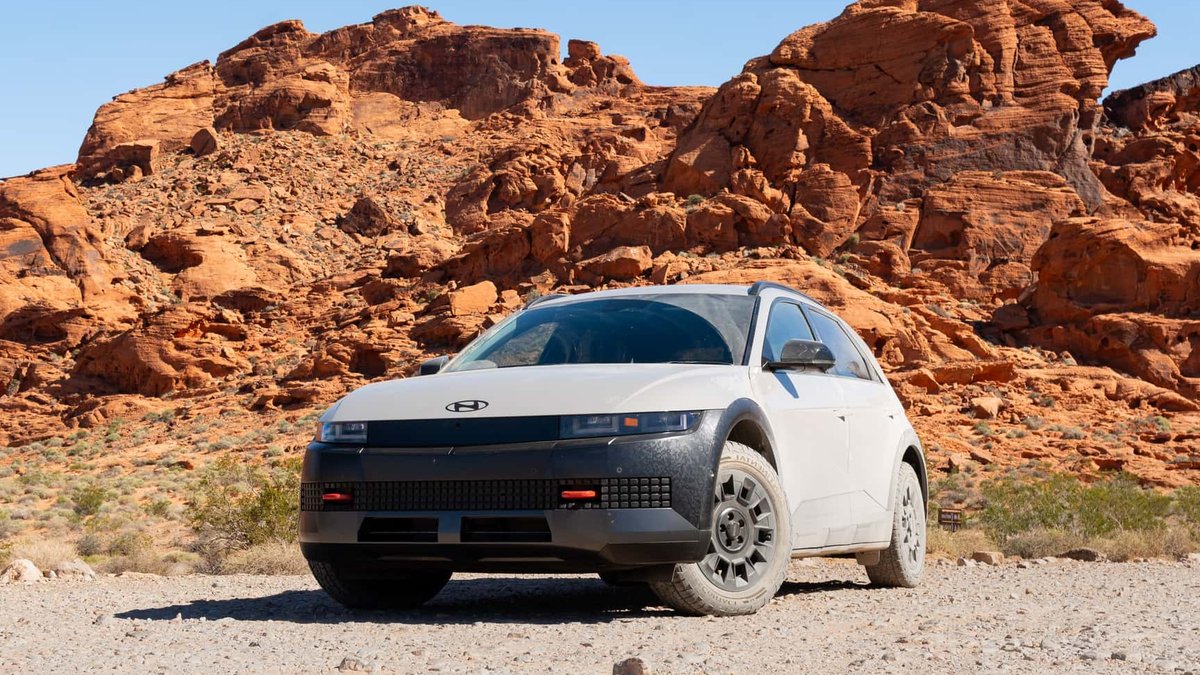
Hyundai and Kia recorded their best July ever in terms of car sales, but the momentum for electric vehicles took a sharp turn downward in the United States. The two sister brands achieved their third consecutive month of growth, a trend driven largely by the resurgence of internal combustion hybrids.
Sister brands Hyundai and Kia ended July with record-breaking results, but the two marques’ electric models failed to keep up with the momentum stateside. For both automakers, it was the best-ever July in terms of sales, as well as the third consecutive month of growth, and it was mostly due to the huge success of hybrids. Hyundai sold a total of 82,480 cars in the United States last month, up 3% year-over-year, followed by Kia with 75,857 units, a 7% increase over the same month last year.
The Hyundai Sonata hybrid, Elantra hybrid, and Tucson set all-time July sales records, which also helped the nameplate land a best-ever July for hybrid sales. The Tucson crossover was Hyundai’s best-selling model last month in the United States, landing 19,714 deliveries. The Elantra sedan was a close second, with 17,115 sales, followed by the Santa Fe SUV with 13,373 units.
Related: Lucid Sets New World Record Suddenly
Hybrids See Massive Gains
It’s a similar story at Kia. The company’s hybrid models led the July charts with record-setting sales figures and a 108% increase over the same month last year. The Sportage crossover was at the top of the list, with a 76% boost in sales, while the Carnival hybrid and Sorento hybrid gained 16% each.
The Sportage was the brand’s best-selling model overall, with 16,083 units reaching new customers, followed by the K4/Forte with 12,094 sales and the Telluride with 11,816 units. Looking at the broader picture, the rise of hybrid vehicles often reflects immediate consumer responses to economic pressures, much like the rapid shift toward compact cars during the 1970s oil crisis. This historical parallel suggests that while demand for traditional gas engines is peaking now, it is a cyclical market reaction rather than a permanent shift away from electrification.
Electric Sales Struggle
On the EV front, Hyundai sold 674 EV6 crossovers, down 47% compared to last year, while the EV9 SUV ended July with 1,650 sales, down 5% year-over-year. From the beginning of the year through July, the EV9’s numbers look a lot better, with a total of 8,685 sales—up 30% from the same period last year. The EV6, however, is not looking so hot, though, with 4,717 units sold in the first seven months, down 34%.
Related: GWM launches new 3.0L turbo-diesel engine
Hyundai’s electric offerings went into the red. The Ioniq 6 sedan was the company’s worst-selling model in July, with just 76 units delivered, down 82% year-over-year. However, this shouldn’t come as a surprise, seeing how Hyundai discontinued the regular Ioniq 6 trims stateside, leaving just a limited number of Ioniq 6 N available for customers. The Hyundai Ioniq 9 SUV scored 700 new customers last month, a 35% decrease from last year, while the Ioniq 5 crossover secured 3,636 sales in July, down 38% compared to the same month last year.
Looking at the overall picture, though, it’s still looking decent for Hyundai’s EVs. From January through July, the Ioniq 5 sold 24,366 units, down 2% from the same period last year, while the Ioniq 9 sold 5,558 units, a 166% increase year-over-year. Hyundai sold 1,317 Ioniq 6s during the same period, leading to an 82% decrease.


