
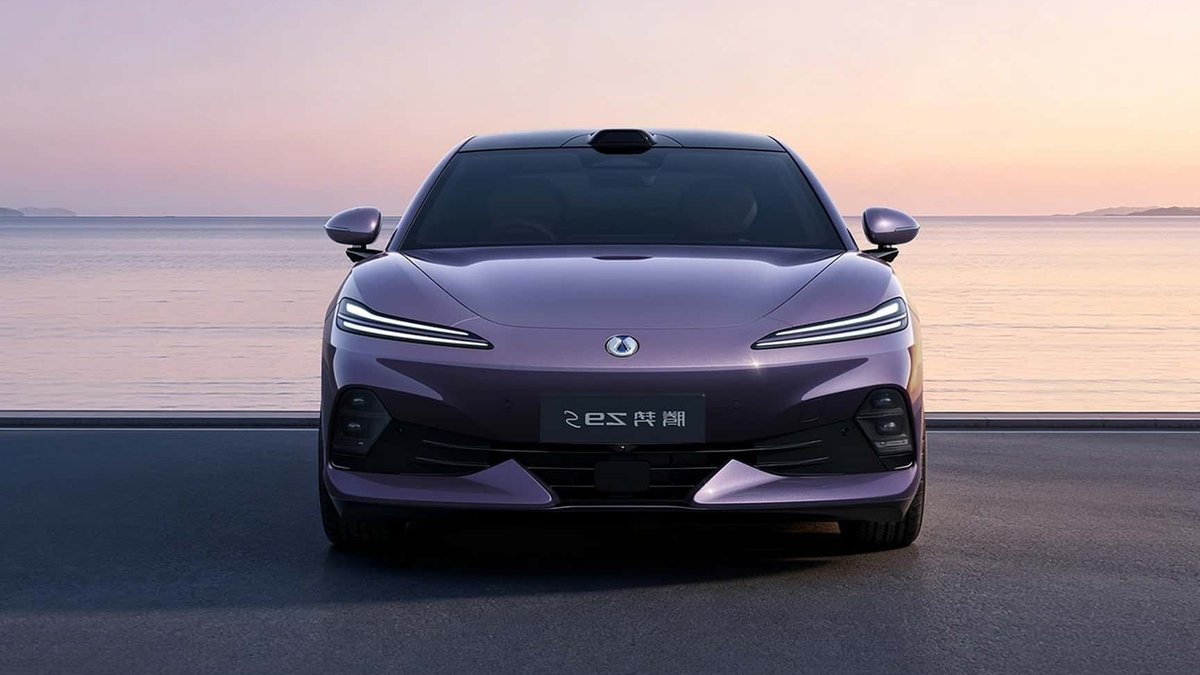
The Chinese automaker BYD has unveiled what it calls the world’s longest-range electric vehicle, the Denza Z9S, claiming a maximum driving distance of 683 miles on a single charge. This figure positions the sedan as a leader in EV range, though the context of its testing standards plays a significant role in how that number is interpreted. The Denza Z9S is part of BYD’s broader strategy to establish dominance in the global electric vehicle market, leveraging its vertical integration capabilities, which include in-house battery production and advanced powertrain technology.
The four-door sedan starts at the equivalent of $47,100 in China, a price point that undercuts many premium electric vehicles in Western markets while offering comparable or superior range. The standard 102.3-kilowatt-hour lithium-iron-phosphate (LFP) battery is a key component of this value proposition. LFP batteries are known for their thermal stability and longevity, though they have historically lagged behind nickel-manganese-cobalt (NMC) chemistries in energy density. BYD’s Blade battery, however, represents an evolution of LFP technology, achieving higher energy density through a unique cell-to-pack design that eliminates traditional module structures. This allows for more efficient use of space and improved cooling, which in turn enables the battery’s rapid charging capabilities. The company states that the battery can recharge from 10% to 70% in five minutes and reach 97% in nine minutes.
Range claims come with caveats
The 683-mile figure is based on China’s CLTC (China Light-Duty Vehicle Test Cycle) testing protocol, which simulates driving conditions that are generally less demanding than those used in the EPA’s testing standards. The CLTC cycle includes lower average speeds, fewer aggressive acceleration events, and less reliance on climate control systems, all of which contribute to higher range estimates. For comparison, the EPA’s testing incorporates a mix of city and highway driving, with higher speeds and more frequent acceleration, as well as the use of heating and air conditioning, which can significantly reduce range. Under these conditions, the Denza Z9S’s range would likely drop to around 480 miles, a figure that, while still competitive, no longer holds the title of the longest-range EV in the world.
The current EPA leader, the Lucid Air Grand Touring, is rated at 512 miles. On the CLTC cycle, the Air would likely be rated for approximately 730 miles.
Denza offers three versions of the Z9S, each with a different range: 484 miles, 571 miles, and the top-tier 683-mile model. All variants share the same 102.3-kWh battery and fast-charging infrastructure, but they differ in powertrain configurations. The base model features a single electric motor rated at 496 horsepower, while the highest-end version employs a tri-motor setup producing 1,193 horsepower.
Performance and tech features
The base model of the Denza Z9S comes equipped with a single electric motor generating 496 horsepower. The top-tier version escalates output to 1,193 horsepower through a tri-motor configuration. The tri-motor system also enables the vehicle to operate in different drive modes, though the specific modes and their impact on range have not been detailed.
Related: Hyundai, Kia Hit New U.S. Sales Records but EVs Drop
Beyond raw power, the Z9S incorporates several advanced chassis technologies. Rear-wheel steering reduces the turning radius at low speeds while improving high-speed stability by allowing the rear wheels to turn in the opposite direction of the front wheels. The adaptive air suspension further enhances ride quality and handling by adjusting damping rates and ride height in real time, based on road conditions and driving trends.
The interior of the Denza Z9S follows the industry trend toward minimalist, screen-heavy layouts. The company’s “God’s Eye 5.0” advanced driver assistance system is standard across all trims, utilizing a roof-mounted Lidar sensor alongside cameras and radar to enable features such as adaptive cruise control, lane-keeping assist, and automated parking.
According to CNEVPost, Denza’s general manager described the car’s range as something owners might “forget” about, given how infrequently they would need to recharge. Real-world range often falls short of lab-tested figures due to variables such as driving style, terrain, temperature, and accessory use. For example, highway driving at sustained speeds can reduce range by 20% or more compared to mixed driving conditions, while cold weather can further degrade battery performance by increasing internal resistance. The Denza Z9S’s LFP battery may mitigate some of these effects, as LFP chemistries are less sensitive to temperature fluctuations than NMC batteries, but the extent of this advantage has not been quantified in independent testing.
This isn’t the first time BYD has made bold claims about range or charging speed. The company’s Blade battery has been marketed as a breakthrough in fast-charging technology, with BYD asserting that it can withstand more charge cycles than conventional batteries without significant degradation. However, independent verification of these claims remains limited, as most third-party testing has focused on short-term performance rather than long-term durability.
The Denza Z9S is currently available only in China, with no official word on international expansion. The Chinese market, which accounts for more than half of global EV sales, provides a fertile testing ground for new technologies, but regulatory and infrastructure differences in other regions could pose challenges. For now, the Z9S joins a growing list of EVs pushing the boundaries of range, though how those numbers translate to real-world driving—particularly in diverse conditions—remains the critical question for potential buyers.


