
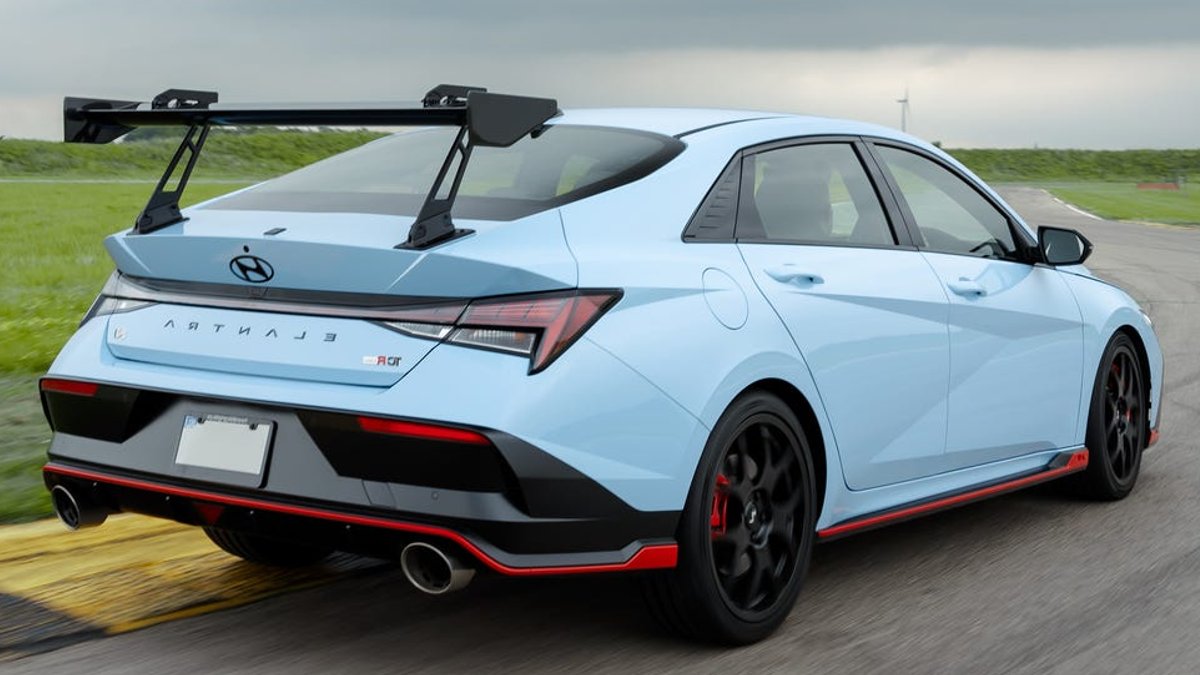
Hyundai plans to expand its N performance division with more variety, introducing an intermediate step between the N Line trims of standard Hyundais and full-on track-ready N models.
This move is part of the company’s product offensive scheduled between now and 2030, targeting more market niches.
At the 2026 CEO Investors Day event in Seoul, Hyundai detailed its business plan, which includes an expansion of its N performance subbrand.
The current lineup of N models includes the Elantra N, the Ioniq 5 N, and the upcoming Ioniq 6 N, as well as the i20 N and i30 N, hatchbacks sold in markets outside of North America.
Hyundai also offers an N Line trim of many of its core models, including the Elantra, Sonata, and Tucson in the United States, focusing on sporty looks over outright performance.
Related: Porsche Unveils Entry-Level 911 GT3 Racing Car
In 2025, the brand’s N models sold just 20,000 units globally, while the N-Line trims of the core lineup moved 161,000 units in the same period.
They see an intermediate step in the N family as an opportunity to sell even more, with details sparse at the moment.
According to the company’s presentation, the as-yet unnamed high-volume performance trims will feature powertrains from the N models but at a more affordable price and in more daily-driver-friendly packages.
Other brands have taken similar strategies, such as Honda with its Civic offered in Sport, Si, and Type R forms, and BMW with its standard, “M lite”, and M models.
This strategy provides an opportunity for Hyundai to push the performance envelope further, creating more track-focused products and potentially more N models in general, with more variety of powertrains, body styles, and price tags.
More information on the N brand’s expansion will likely come soon, given Hyundai’s reputation for moving quickly, with several new models on the horizon in the next year, including an all-new Elantra and Tucson.
Related: Lucid EV Accelerates Faster Than Corvette
Hyundai’s approach compares to similar situations in the past, where brands have successfully expanded their performance divisions by offering a range of models with varying levels of performance and pricing.
For instance, the Honda Civic has been offered in different forms, allowing the brand to cater to a wider range of customers, from those looking for a sporty daily driver to those seeking a track-ready vehicle.
Hyundai’s strategy to introduce an intermediate step in the N family could similarly allow the brand to appeal to a broader audience, potentially leading to increased sales and a stronger presence in the performance market.
As Hyundai continues to expand its N performance division, it will be important to see how the brand balances its focus on performance with the need to offer more affordable and practical models, and how this approach compares to that of its competitors in the market.
The brand’s expansion plans are moving forward.


