
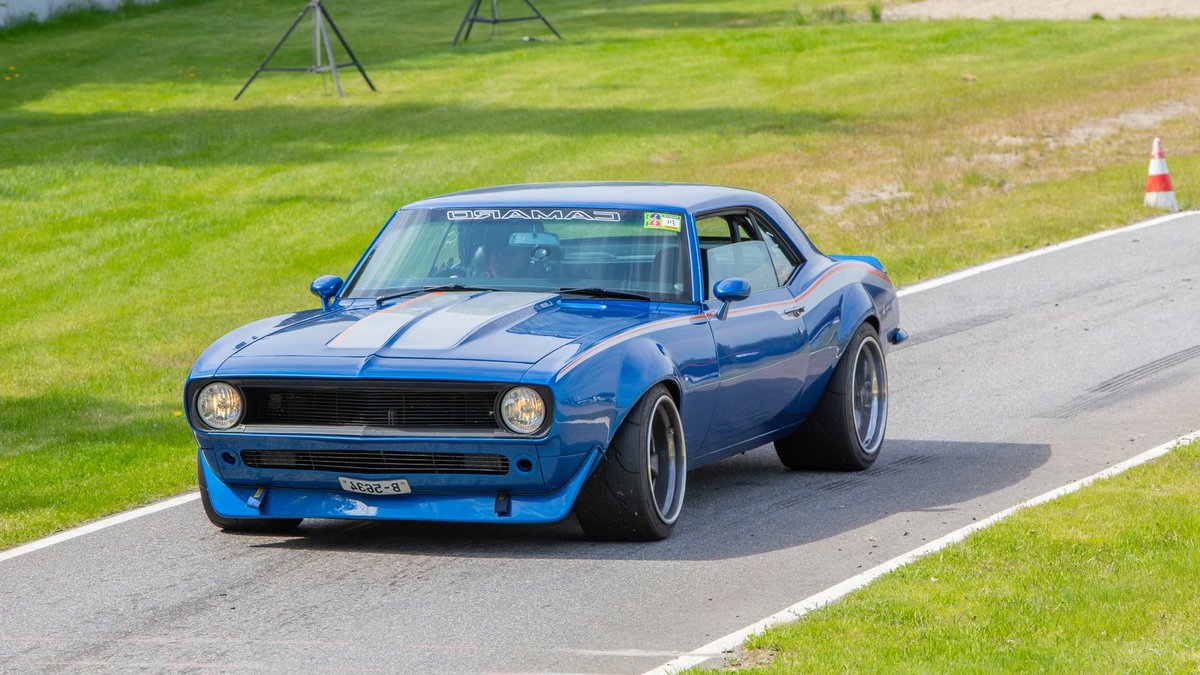
A 1993 Chevrolet Camaro with its base V6 engine was once mocked by car fans, yet it still trails modern turbocharged four-cylinder engines in the same class. When MotorWeek tested the V6 Camaro, it took 8.8 seconds to accelerate from 0 to 60 mph—more than half a second slower than a 1993 Nissan Altima with a four-cylinder and manual transmission. Even with the Altima’s lighter build, the comparison shows how far base muscle cars have fallen behind mid-range sedans from the same decade.
This change mirrors a broader shift in automotive engineering. The 2016 Chevrolet Camaro’s base 2.0-liter turbo-four produced 274 horsepower and 295 lb-ft of torque, reaching 60 mph in 5.4 seconds, a time faster than a V6-powered Altima from the same era. The turbo-four’s lighter weight also improved handling, an area where the 1993 Camaro struggled despite its heavier V6 setup.
Ford’s Mustang EcoBoost continues this trend. Its 2.3-liter turbo-four generates 315 horsepower and 350 lb-ft of torque, accelerating to 60 mph in 4.5 seconds, quicker than high-performance sedans like the Honda Accord 2.0T. In comparison, a 1997 Mustang V6 convertible took 10.1 seconds to reach 60 mph, while a 2015 EcoBoost convertible with a six-speed automatic managed 6.1 seconds; still slower than the current model.
Turbocharged fours also bring practical benefits over V6s. When driven conservatively, they deliver better fuel efficiency without losing performance. The Mustang EcoBoost, for example, outperforms many V6 muscle cars in both acceleration and everyday use. However, the Mercedes-AMG C63 controversy, where replacing a V8 with a four-cylinder sparked backlash, proves that consumer expectations for performance cars still favor traditional engine setups.
Performance figures confirm that modern turbo-fours have narrowed the gap not only with older V6 muscle cars but also with family sedans. The 1993 Camaro V6 was slower than a four-cylinder Altima; today, a Mustang EcoBoost beats a V6 Accord. These improvements reflect how turbocharging and lightweight materials have redefined what base muscle cars can achieve, even if enthusiasts continue to value the sound of a V8.
Despite the advantages of turbocharged engines, some manufacturers have faced resistance when moving away from larger displacement engines. The C63’s shift to a four-cylinder, though technically capable, alienated buyers accustomed to the V8’s signature character. This tension between innovation and tradition remains a defining factor in the muscle car market.


