
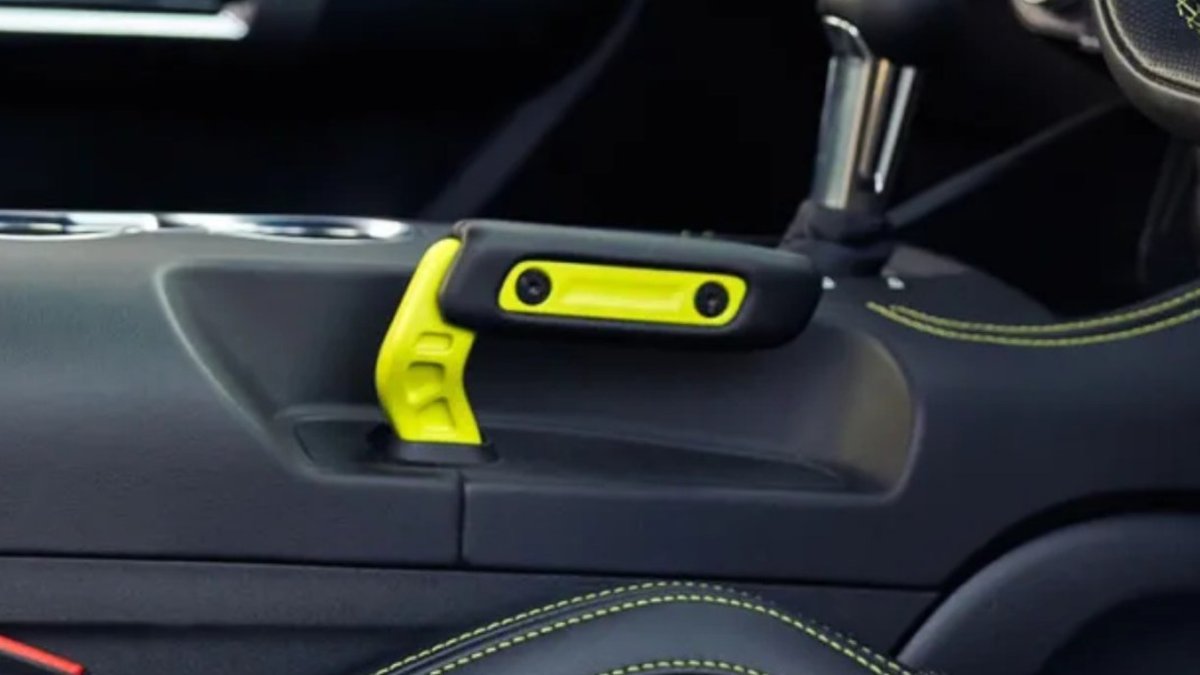
Drivers still value the old-fashioned hand brake, a feature that has largely disappeared from modern vehicles despite its utility. Ten years ago, a writer purchased a brand-new Ford Fiesta ST, which came with a complimentary day of driver education at Utah Motorsports Park. The program, known as ST Octane Academy, combined classroom sessions with time on track and a massive autocross course. During the timed runoff, the instructors used custom-fabricated “drift” brakes instead of the standard hand brake.
How the Drift Brake Works
The drift brake functions similarly to a traditional hand brake by engaging the rear brakes with a yank of a handle. The key difference is that it lacks latching detents, so it springs back to the “off” position when released. This design makes it useless for holding a car stationary on a hill but is highly effective for breaking a car’s rear end loose on command. Instructors placed a tight 180-degree turn at the start of the course, requiring drivers to perform a j-turn to handle it.
Getting sideways is often frowned upon in serious autocross competitions. A well-designed course is typically meant to be handled without such “trickery.” The writer felt personally offended that this showboaty equipment would count against their time, viewing the drift brake as an equalizer designed to keep experienced drivers from dominating the event. However, the writer has since mellowed and now considers the drift brake a useful tool.
As the manual transmission becomes rarer, the traditional pull-handle parking brake is virtually extinct in modern vehicles. Almost all new cars now feature electronic button or switch parking brakes. The writer notes that while a dual-clutch gearbox can imitate a manual, an electronic parking brake is even less effective than a pedal-activated one for traction management. Ford and RTR recently worked together to engineer a hand brake back into the Mustang, proving that functionality can survive even as cars shrink in size to save costs.
A Return to Basics
The writer finished third in the autocross event. The turbocharged RTR Mustang is described as a “fun little package.” The author expresses gratitude that Ford and RTR took the time to keep this functionality alive, noting that “it’s just fun” is a valid reason to build a car. The old-fashioned hand brake remains a symbol of mechanical simplicity in a complex world.


